

Blog
Vanity Units Buying Guide: Choose the Perfect Bathroom Vanity (2026)

Buying a wrong vanity unit can cost you hundreds of dollars in cost and installation and can waste up to 30% of your bathroom’s usable space. We see it regularly, homeowners who bought a beautiful unit online just to discover that it doesn’t fit through their bathroom door, blocks the shower, or requires expensive plumbing modifications they never budgeted for.
This guide will tell you everything we’ve learned from real customer experiences, installation feedback, and bathroom design expertise.
By the end of this article, you’ll know exactly how to:
-
Choose the right vanity type and size for your specific bathroom layout
-
Avoid the most common (and costly) buying mistakes
-
Match style, storage, and budget without compromising on any
-
Understand which features actually matter and which are just marketing hype
-
Calculate true installation costs so there are no surprises
Whether you are renovating your cramped ensuite or designing a luxury master bathroom, this guide gives you the decision-making framework to choose confidently. No guesswork, no buyer’s remorse—just practical tips and knowledge you need to get it right the first time.
What is a Vanity Unit?
A vanity unit is a piece of furniture that combines a bathroom sink and storage cabinet into one. Instead of having a standalone sink with exposed pipes, you get a complete piece that hides all that unsightly plumbing underneath.
The storage is what makes vanity units so useful. You get drawers, cupboards, or both to keep your toiletries, cleaning products, towels, and all those bathroom essentials that would otherwise clutter your space.
It’s the most important piece of furniture in your bathroom. It anchors the entire room, sets the style, and keeps everything organized. That’s why we always recommend our customers to spend more time to get this decision right!
Key Considerations Before You Buy
Before you decide to buy a vanity unit online, let’s make sure it will actually work in your bathroom. These three factors will save you from costly mistakes and buyer’s remorse.
Measuring Your Bathroom Space
Grab a measuring tape and accurately measure the space where the vanity unit will be installed.
Start with measuring the width of wall space available, but don’t stop there. Account for door swings, both your bathroom door and any shower doors. You need a minimum of 750mm of clearance in front of the vanity so you can actually stand there comfortably and access the storage without any difficulty.
Standard vanity depth is between 400mm to 500mm. But if your bathroom is small, look for compact units that measure 250-350mm. These slimmer options still look great, and they can be absolute lifesavers in compact bathrooms or ensuites.
Measure twice before you order. We’ve seen too many beautiful vanity units that couldn’t fit through doorways or left no room to open cabinet doors. Check your ceiling height too if you are considering tall storage towers or mirror cabinets to accompany your vanity.
Determining Your Storage Needs
Be clear about what you need to store. A single person in a small ensuite has very different needs than a family of four sharing a bathroom.
Make a list of things cluttering your bathroom. Toiletries, makeup, hair styling tools, cleaning products, spare toilet rolls, towels, medications. The list adds up quickly! This will give you an idea about how much storage you need.
The wider the vanity, the more storage you get. A 400mm cloakroom unit might fit your space, but it holds only the basic items. An 800mm single vanity or a 1200mm double basin unit gives you far more room.
If you have young children using the bathroom, drawer storage often works better than deep cupboards where items get lost at the back. They can easily store their toothbrush or morning routine items.
Setting Your Budget
Small cloakroom units start around £100 to £120. Standard single vanity units for an average UK cost £250 to £400, depending on brand, materials, and features. Larger units or double basin designs usually sit around £500 to £800 or more.
Luxury options with solid stone countertops, premium finishes, or designer brands can go up to £1,000. You do not need the highest price to get good quality. Mid-range units with MDF build and water resistant finishes work well in most bathrooms.
You will find these at Vanity Mart. Our vanity units are budget friendly, water resistant, and made from high-quality painted waterproof MDF with 18mm door panels and 16mm side panels
Don’t forget installation costs! If you are swapping an old unit and have decent DIY skills, you might manage it yourself. Otherwise, budget £100 to £200 for professional installation of a standard unit. Wall-hung units or complex plumbing changes will cost more. We always recommend getting professional help.
Types of Vanity Units
The type of vanity unit you choose makes a big difference to how your bathroom looks and works. Although there are many types of vanity units, not all of them will fit in your bathroom. Some might be more wide, some might be extra slim, or some might not have the space you need. So it’s important to consider everything and every situation before buying.
Wall Hung Vanity Units
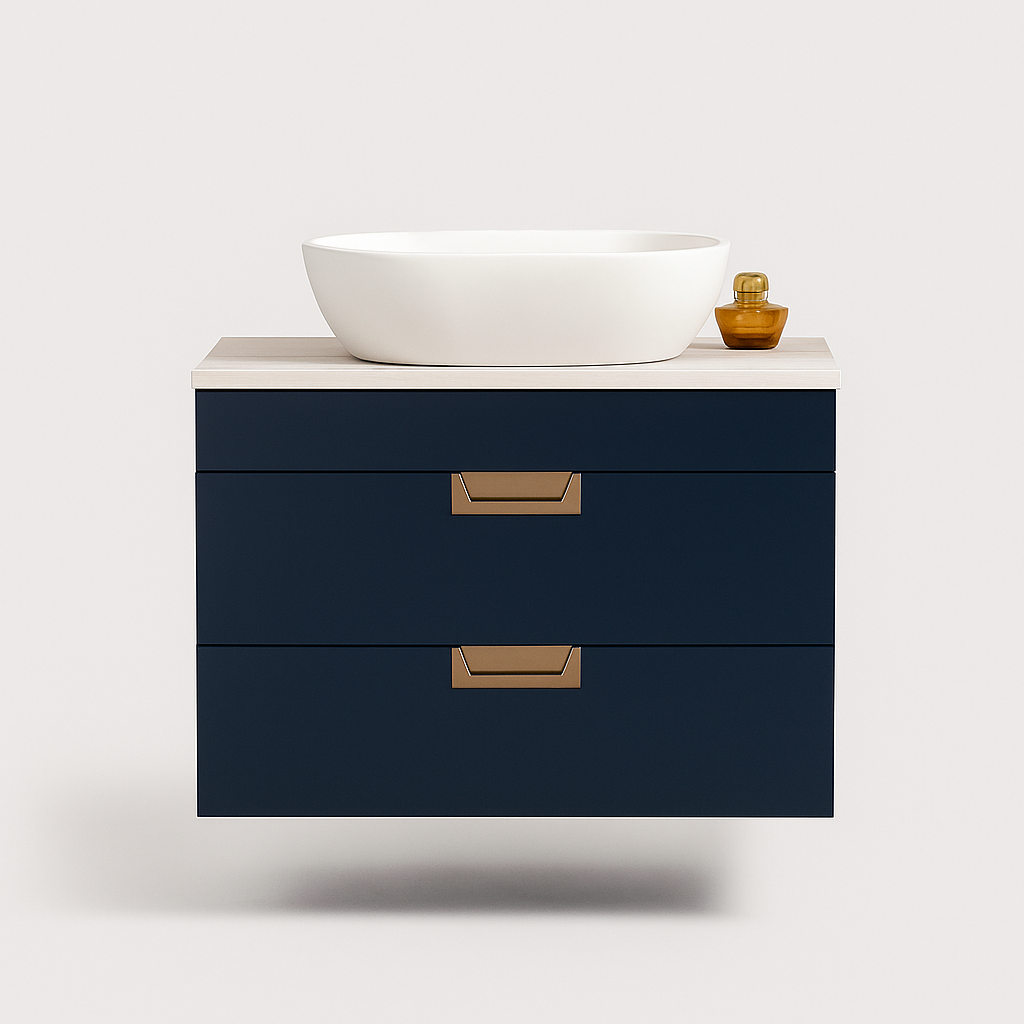
Wall hung vanity units attach directly to your wall and float above the floor. They are brilliant for making small spaces look bigger! By lifting the unit off the ground, your bathroom feels more spacious and cleaning becomes easier too because you can mop right underneath.
The catch? They are tricker to install. Your wall needs to be strong enough to hold the weight. You will also need a professional to install it. You might also get a little storage compared to a floor-standing unit of the same width since wall-hung designs don’t extend all the way down.
For a comprehensive breakdown of the advantages and potential drawbacks, read our complete guide on the pros and cons of floating vanity units.
Floor Standing Vanity Units
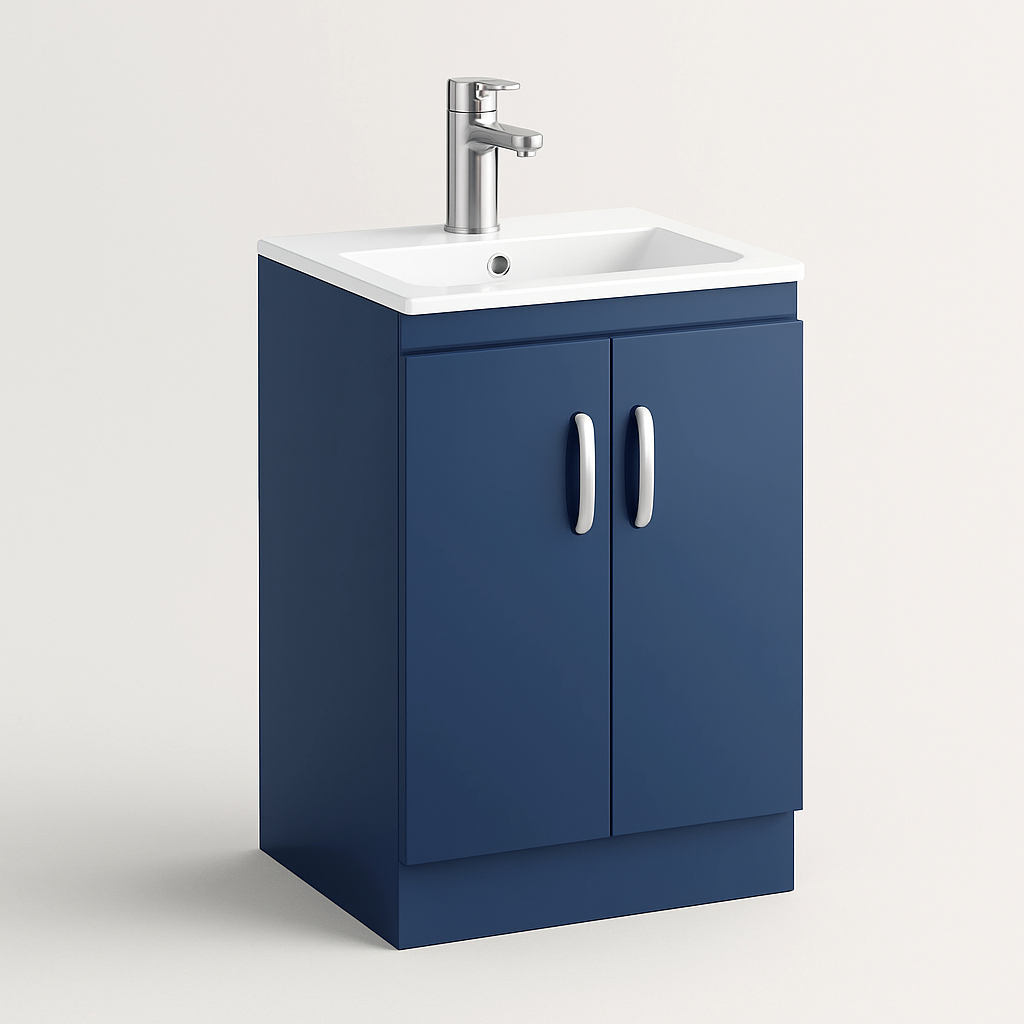
Floor standing units sit directly on your bathroom floor. They’re the traditional choice and for good reason. They are easy to install, even if you are doing it yourself. You also don’t need to worry about wall strength or complicated mounting. You typically get more storage space, and they work brilliantly in both modern and traditional bathroom designs.
The downside? They take up more space and can make small bathrooms feel cramped. Cleaning around the base takes more effort than mopping under a wall-hung unit.
Single Basin Vanity Units
Single basin vanity units feature one sink and come in widths from 400mm up to 900mm. They’re the most popular type and work in everything from tiny cloakrooms to big master bathrooms where you don’t need two sinks.
For most homes, a single basin makes perfect sense. It gives you plenty of counter space, ample storage, and doesn’t overcrowd your bathroom. Even in a larger space, you might prefer a generous single vanity that offers luxurious storage over cramming in a double basin.
Double Basin Vanity Units
Double basin vanity units start at around 1200mm wide and go up from there. They are genuinely luxurious if you have the space! Two people can get ready simultaneously without fighting for mirror time or elbow room.
These work perfectly in master suites for couples or in family bathrooms where multiple people access the same bathroom. The storage underneath is typically divided, so each person can have their own dedicated space.
Cloakroom Vanity Units
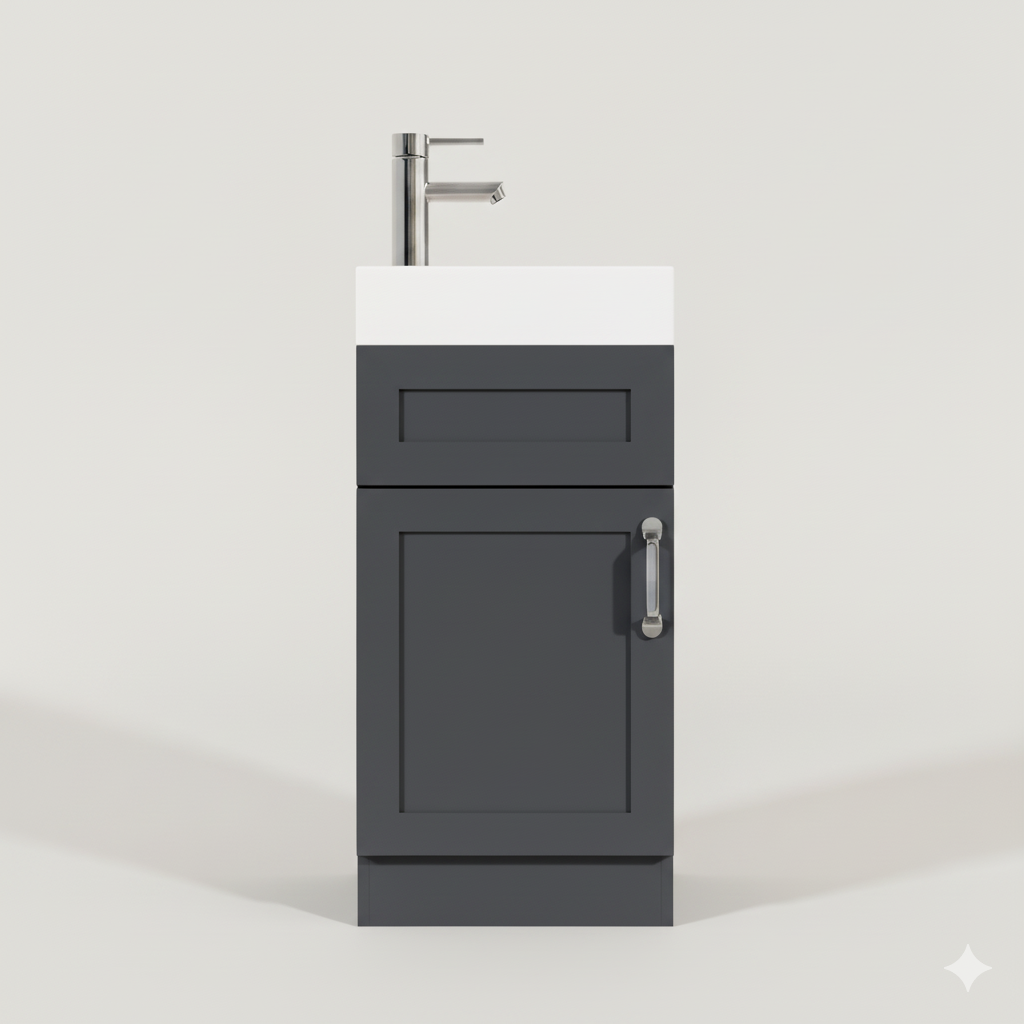
Cloakroom vanity units are made specifically for tight spaces. They are narrower and shallower than standard vanities but still pack in essential storage. You’ll find these units as small as 400-450mm wide with depth of 250-350mm.
And don’t think these are second best! Modern cloakroom units look fantastic and work surprisingly good. They’re perfect for guest bathrooms, downstairs cloakrooms, or small ensuites.
Corner Vanity Units
Corner vanity units are brilliant for awkward bathroom layouts. They are designed to fit into corners that would otherwise go unused. The triangular or curved design fits snugly where two walls meet.
We love corner units for cloakrooms and compact bathrooms because they free up valuable floor space while still giving you a proper basin and storage. They’re also great for creating interesting layouts in larger bathrooms where you want to break away from standard wall-to-wall arrangements.
Combination Units
Combination units join your basin vanity with your toilet into one piece of furniture.
Smaller combination units are around 1000-1100mm wide and are perfect for compact ensuites or small family bathrooms. They usually combine a basin with storage on one side and a back-to-wall toilet with a hidden cistern on the other. Everything matches perfectly, and you save loads of space compared to fitting separate pieces.
Larger combination units of 1500mm or more work beautifully in bigger bathrooms. They create a luxurious, furniture-style look with extra storage options. The matching design gives you that high-end, fitted bathroom look without custom cabinetry costs.
The toilet unit part cleverly hides the cistern while providing additional storage above or around it. You can choose left-hand or right-hand configurations, and many are reversible to fit your specific bathroom layout.
Before installation make just sure your plumbing is in the right place for combination units. If you are replacing an old fixture, check that the pipe positions match up or be ready for extra plumbing work.
Choosing the Right Size
Measuring Your Space
Before you choose any vanity unit, you need to measure your available space accurately. Understanding the exact dimensions of your bathroom prevents costly mistakes and ensures proper fit.
Start by measuring the width of your available wall space. Then measure the depth, which determines how far the unit can project into the room without blocking your movement. Remember to account for door swings. Your bathroom door, shower door, and vanity drawers must all open without collision.
We recommend leaving at least 700 to 750mm of space in front of the vanity. This provides a comfortable room to stand and use the basin without feeling cramped.
Also consider what else occupies the wall. If there’s a window above, ensure the vanity won’t block it or create awkward proportions. The vanity should fit comfortably in its location, not appear forced or shoehorned.
Standard vs. Reduced Depth
Standard bathroom vanity units typically measure between 400mm to 500mm. This represents the optimal balance for most UK bathrooms, providing good storage capacity without protruding too far into the room.
Reduced depth units measure 250-350mm deep. These slimmer designs prove invaluable in tight spaces where a standard unit would overwhelm the room or obstruct pathways.
You do sacrifice some storage capacity with reduced depth units. However, in a small bathroom, the improved flow and functionality justify this trade-off. We’ve found that smart organization allows you to store more than you might expect in these compact units.
Vanity Unit Styles
Modern and Minimalist
Modern vanity units emphasize clean lines and uncluttered surfaces. We typically recommend wall-hung units with handleless drawers, integrated sinks, and neutral color palettes for this aesthetic.
This style prioritizes function and simplicity. Every element serves a purpose, with no unnecessary decoration. Materials like glass, polished stone, and smooth finishes dominate the design.
This approach works beautifully in contemporary bathrooms where you want a sleek, sophisticated appearance. It proves particularly effective in smaller bathrooms because the simplicity prevents visual clutter.
Traditional and Classic
Traditional vanity units embrace detail and craftsmanship. You’ll find features like slider doors, paneled fronts, turned legs, and ornate hardware in these designs.
Freestanding units work particularly well for this aesthetic. We suggest pairing them with classic materials like marble or granite countertops for an authentic period feel.
These units suit Victorian, Georgian, or farmhouse-style bathrooms where you want a timeless, elegant appearance. They add character and warmth that modern styles sometimes lack.
Choosing Your Color
White
White vanity units remain classic for good reason. They create a fresh, clean aesthetic that works with any bathroom style, from modern to traditional. White reflects light, making smaller bathrooms feel bigger and brighter. It’s a safe choice that won’t become outdated or clash with future design updates.
Grey
Grey is the middle ground between white and black. It adds depth and interest without appearing too bold or attention-grabbing.
Light greys create a soft, neutral backdrop that’s perfect for modern bathrooms. Darker greys add drama and work beautifully as statement pieces in contemporary designs.
Grey vanity units pair wonderfully with natural stone countertops and coordinates with virtually any handle finish. Chrome works for modern looks, brass adds warmth, and black provides contrast.
Blue and Green
Blue and green vanity units inject personality, a nature element and color into your bathroom. These colors are experiencing a significant surge in bathroom design popularity.
Light blues and mint greens create a coastal or cottage vibe that feels fresh and playful. Deep navy and forest green bring sophistication and richness to the space.
We particularly favor pairing blue with black hardware and green with brass fixtures. These combinations appear intentional and polished rather than random.
Wood Finish
Wooden style vanity units add warmth and texture without the maintenance concerns of real wood in a moisture-rich environment. The woodgrain finish provides that natural aesthetic while remaining practical for bathroom use.
Wood finishes pair perfectly with black hardware, which provides excellent contrast and a z edge. They’re also forgiving regarding wear because minor marks blend naturally, unlike white or black finishes where even small scratches stand out.
Storage Options
Drawers
Drawers offer easy organization and accessibility. Everything becomes visible when you pull the drawer open, eliminating the need to dig through a dark cabinet searching for that hairbrush.
You can keep your small items like toiletries, makeup, and grooming tools. Many vanity units include dividers or sections to maintain organization.
Doors
Vanity units with doors provide open cabinet space that’s perfect for larger items. We’re talking about cleaning supplies, toilet paper, bins, or stacks of towels.
The open interior provides flexibility to arrange storage as needed, without being constrained by fixed drawer dimensions. You can even add your own organizers or baskets to customize the space.
Installation Considerations
Wall Hung vs. Freestanding
Wall-hung units require strong wall support and proper anchoring. You’ll likely need wall studs or reinforcement to handle the weight, making installation more complex than freestanding options and you might have to spend an extra £50 to £100 for professional help.
The benefit is a sleek, modern appearance with easy floor cleaning. These units make small bathrooms feel more spacious by revealing more floor area.
Freestanding units are significantly easier to install. They sit on the floor with minimal wall attachment needed (though we recommend securing some basins to the wall for extra support). This makes them more suitable for DIY installation if you are comfortable with basic work.
We’ve created a detailed comparison that dives deeper into the benefits and drawbacks of wall-mounted vs floor standing vanity units to help you make the right choice for your bathroom.
Plumbing Requirements
We strongly recommend checking your existing plumbing layout before selecting a unit. The easiest installation replaces your old basin in the same location because your pipes are already positioned correctly.
If you are moving the vanity to a different wall, you’ll need to reroute pipes. This adds both complexity and cost to the project.
Countertop and wall-hung units may require plumbing adjustments compared to standard integrated basin designs. Factor this into your planning and budget. When uncertain, consult with a professional plumber before making your final purchase.
Cost and Budget
Price Ranges by Type
Small cloakroom vanity units start around £100-£120. These compact units provide essential functionality without straining your budget.
Standard single vanity units for main bathrooms typically range from £250-£400. This price point gets you quality construction, decent storage, and a variety of style options.
Larger units and double vanities start around £500-£800 and increase from there. you are paying for the extra size, materials, and often more premium finishes.
Materials significantly impact price. Solid wood or stone countertops cost more than MDF or laminate alternatives. Premium brands with designer details command higher prices than basic functional units.
Want to see how Vanity Mart compares to other retailers? Read our detailed Vanity Mart vs Victorian Plumbing comparison to understand the value differences.
Installation Costs
If you are doing a like-for-like vanity replacement in the same location, installation is relatively straightforward. A professional plumber will typically charge around £100 to £200 for a half-day job. Or maybe you can do it yourself.
More complex installations cost more. Moving plumbing, installing wall-mounted units, or fitting combination units with concealed cisterns require additional work and expertise, which increases the final bill.
Deck-mounted taps are quicker and cheaper to install than wall-mounted taps, which require new plumbing runs and wall work. Consider this when selecting your complete setup.
If you are comfortable with DIY work, freestanding units can eliminate installation costs entirely. Just ensure you have the necessary tools and feel confident handling basic plumbing connections.